
The window to upgrade in Sydney’s East is opening. Here’s why…
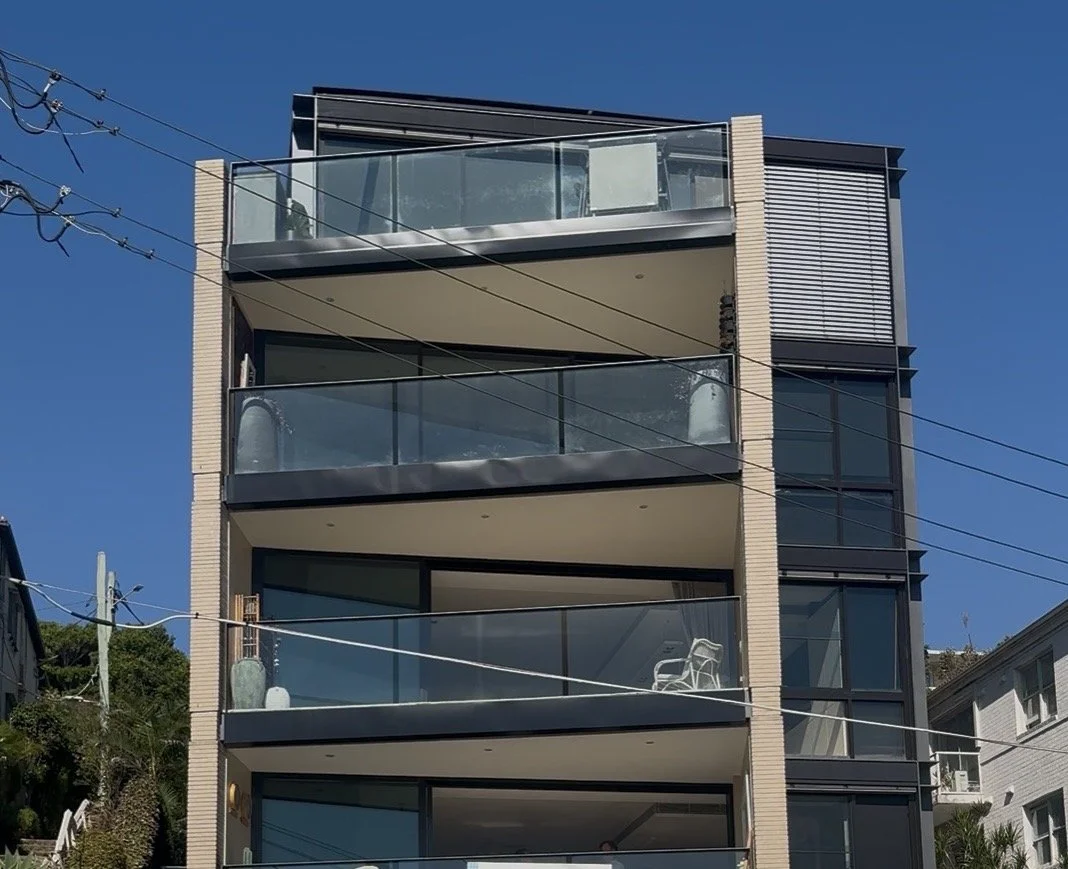
Apartment building, Bronte
1. Since Covid, the gap between house and apartment prices was supercharged
For years, the gap between house and apartment prices in Sydney's Eastern Suburbs only moved one way — wider.
Between 2020 and early 2024, Sydney's median house price grew at nearly double the rate of apartments. In the East, that gap stretched even further, making it feel nigh on impossible to trade up.
But something has shifted.
The approximate medians tell the story year to March 2026:
Bronte: apartments ~$1.8M (up 18%) vs. houses ~$5.675M (down -7.7%)
Coogee: apartments ~$1.59M (up 3.6%) vs. houses ~$4.33M (down -5.2%)
2. Opportunity knocks
For apartment owners who bought in the Eastern Beaches in the last 5–10 years, there is an opportunity. Your asset has likely grown significantly in value. The upgrade premium — the gap you need to bridge to get into a house — is narrowing, at least relative to recent years.
Right now, the impact isn't consistent across all suburbs in the east, so if you own an apartment in Bronte, Clovelly, Coogee, Bondi, Randwick, Waverley and beyond and have been thinking about making the move to a house — now is a good time to model it properly.
And for those looking at an upgrade from a house to a bigger or better house, the market currently is presenting some opportunities. Again the market is not operating evenly across all suburbs and home types across the East, so we’re still seeing some good sales results. Slowing down the decision making process and some careful market analysis is more important than ever. But equally an over abundance of caution may see opportunity missed.
If building costs continue to escalate and that flows on to greater constrained supply, the most likely outcome for house prices is a renewed upward trajectory - the only question is when.
3. What can history teach us?
Sydney has had 6 meaningful corrections since the 1980’s. Most last 12-24 months. Only the late-80’s crash exceeded -20%. Every single one has been fully recovered - and then some. Here are the Sydney-wide indicative figures:
Late 1980’s - 1991: As interest rates peaked just shy of 20%, Sydney house prices dropped -24% across 2 years
2004-2006: a decline of -5-7% across 18 months
2008-2009 (GFC): -10-13% lost in about 12 months
2011-2012: -3-5% in about 12 months (more a soft patch than a sharp correction)
2017-2019: -8-9% across 24 months
2022: -11-13% across 12 months
2025-now: -1-2%
Often the East acts as bellwether suburbs (evidenced now with outer western and more affordable areas delivering continued gains). Hence, why we’re already seeing bigger falls in some eastern suburbs than the figure above shows. Equally, it tends to be the first to move back up. Keep in mind that successfully timing the trough is really only possible in hindsight.
Summary
The gap between apartment and house prices is closing
More generally, the upgrade premium is narrowing
Sentiment shifts tend to start in the east and flow outward
This century, we haven’t had a correction greater than about -13%